Finding Intimacy in Indonesia: My Journey as an Intimacy Coordinator Abroad
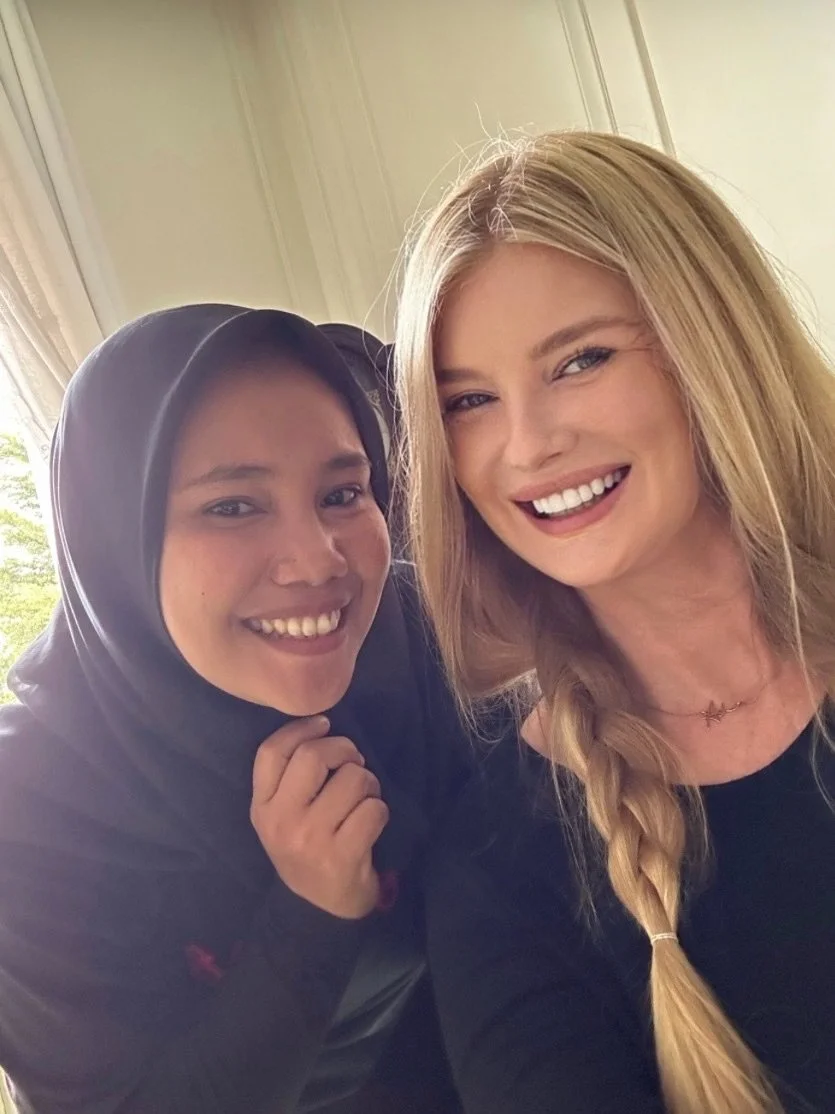
By Asha Astrid Cybele
There are moments in your career that feel like a quiet turning point—where you realize you’ve stepped into something not only new, but meaningful.
For me, that moment came on my first night in Jakarta.
I had just arrived, exhausted from travel, standing in the soft glow of a city I didn’t yet know. Then I heard the call to prayer echoing across the skyline. It was grounding, humbling, and deeply beautiful. I remember thinking: I am somewhere entirely different, and I am here for a reason.
A New Chapter Begins
Before Indonesia, I had just completed a short film in Los Angeles titled Full Service, directed by Soma Helmi. It was a creatively fulfilling experience and one that reaffirmed for me the importance of intimacy coordination in storytelling.
The producers responded positively to the project and soon offered Soma the opportunity to develop a series in Indonesia called Still Single. When she invited me to join the production as Intimacy Coordinator, I enthusiastically accepted.
At the time, intimacy coordination was still largely unfamiliar in Indonesia. What began as a production job quickly evolved into something much larger. I found myself helping introduce the profession to a new industry and participating in conversations about how performer safety and consent practices could be integrated into local filmmaking culture.
In many ways, I became one of the first Intimacy Coordinators working in Jakarta, helping establish a foundation for what the role could look like in Indonesia.
Jakarta: First Impressions
I stayed in a beautiful high-rise in one of Jakarta’s most vibrant neighborhoods, connected to a luxury mall that quickly became my compass for navigating the city.
It was a fascinating contrast—modern, polished, and buzzing with energy, set against a culture rich in tradition, spirituality, and nuance.
In between work, I explored. I walked through markets, shared meals with new friends, and immersed myself in a culture that was both welcoming and endlessly fascinating. Later, I traveled to Bali, where the pace slowed and the landscape transformed into something almost dreamlike.
Indonesia, in all its layers, was generous to me.
Redefining Intimacy On Screen
Working on Still Single required a level of sensitivity and adaptability that deeply shaped me as an Intimacy Coordinator.
The Indonesian romantic comedy-drama series Still Single, now available on Netflix Indonesia, follows Maya, a jewelry designer who feels increasing pressure to marry after her father's diagnosis. Seeking guidance from astrology and her close-knit group of friends, she embarks on a journey to find love while navigating family expectations, friendship, and self-discovery. The series stars Yuki Kato, Samo Rafael, and Nadine Alexandra, and was directed by Soma Helmi.
In Indonesia, cultural standards around physical affection on screen are very different. Kissing is generally not permitted on broadcast television, and even hugging can be restricted depending on the context. This means intimacy must often be reimagined entirely.
Instead of relying on physical touch, storytelling frequently focuses on:
• Eye contact
• Emotional proximity
• Body language
• Spatial dynamics
• Suggestion rather than direct depiction
It becomes an exercise in subtle storytelling—communicating connection, desire, vulnerability, and romance without the physical markers Western audiences often expect.
In many ways, these creative limitations made the work even more interesting.
That said, Still Single was produced for streaming distribution, which allowed for greater creative freedom. We were able to explore more mature themes, including intimacy and storylines involving infidelity—elements that would have been difficult or impossible to portray on traditional Indonesian television. Working under the direction of Soma provided an opportunity to balance authentic storytelling with evolving industry practices around performer care, communication, and consent.
Today, Still Single can be viewed on Netflix Indonesia.
Building Trust Across Cultures
Introducing intimacy coordination in a new environment requires more than technique—it requires trust.
Many of the actors were encountering intimacy coordination for the first time. My role became not only to choreograph scenes, but also to:
• Create a safe and respectful environment
• Normalize conversations around boundaries and consent
• Support performers in feeling confident and empowered
• Collaborate with directors and producers to balance artistic vision with performer safety
Once that trust was established, the difference was remarkable. Actors felt more grounded, communication became easier, and scenes could be approached with greater confidence and clarity.
Passing the Baton
One of the aspects of the experience that means the most to me wasn't what happened on set—it was what happened afterward.
As interest in intimacy coordination began to grow, I organized workshops in Jakarta for performers, filmmakers, and industry professionals who wanted to learn more about the profession. Many attendees were curious not only about the work itself but also about how they might become Intimacy Coordinators themselves.
Later, I facilitated an additional workshop in Bali specifically for actors, focusing on consent practices, communication tools, and creating safer environments for intimate storytelling.
Because Still Single was associated with Netflix, there was support for developing local talent. Scholarships became available to help emerging practitioners pursue professional intimacy coordination training and certification.
Watching a new generation of Indonesian Intimacy Coordinators begin their journeys was incredibly rewarding. The goal was never to be the only IC in Indonesia—it was to help create a pathway so local professionals could take ownership of the work and continue building it within their own industry.
In many ways, my role became one of passing the baton.
A Collaboration That Meant Everything
I remain deeply grateful to Soma Helmi for trusting me early in this journey. Her support helped shape what came next.
As she shared:
"Asha was absolutely invaluable. She came on board as our intimacy coordinator for my romantic comedy and immediately made the actors feel safe and confident. They still talk about her methods to this day and how much it helped to have her there on set. She's wonderfully collaborative and came with some of her own ideas that we could try out. This was the first time I had worked with an IC and I am never looking back. Hiring an IC should be standard practice."
That collaboration led to more opportunities—working with internationally acclaimed filmmakers, building lifelong friendships, and being invited into cultural spaces I never would have experienced otherwise.
What Indonesia Taught Me
Indonesia didn't just expand my career—it expanded my understanding of what intimacy coordination can be.
It taught me:
• That intimacy is not defined by physicality
• That culture deeply shapes how stories are told
• That safety and creativity can coexist anywhere in the world
• That education and mentorship are just as important as on-set work
• That sometimes the most meaningful legacy is helping others step into the profession after you
Looking Back
When I think about that first night in Jakarta—the call to prayer, the unfamiliar skyline, the feeling of stepping into something unknown—I realize how much it changed me.
Being among the first Intimacy Coordinators working in that space wasn't simply about doing a job.
It was about:
👉 Building a bridge between cultures
👉 Redefining how intimacy can be expressed on screen
👉 Creating space for actors to feel safe, respected, and empowered
👉 Helping develop the next generation of Intimacy Coordinators in Indonesia
And that is work I will always carry with me.
For more insights on intimacy coordination across global productions, follow along at IC en Scene.